Keyword Analysis in SEO: The British Blueprint for Ranking Smarter in 2026
Print / Save as PDFInsider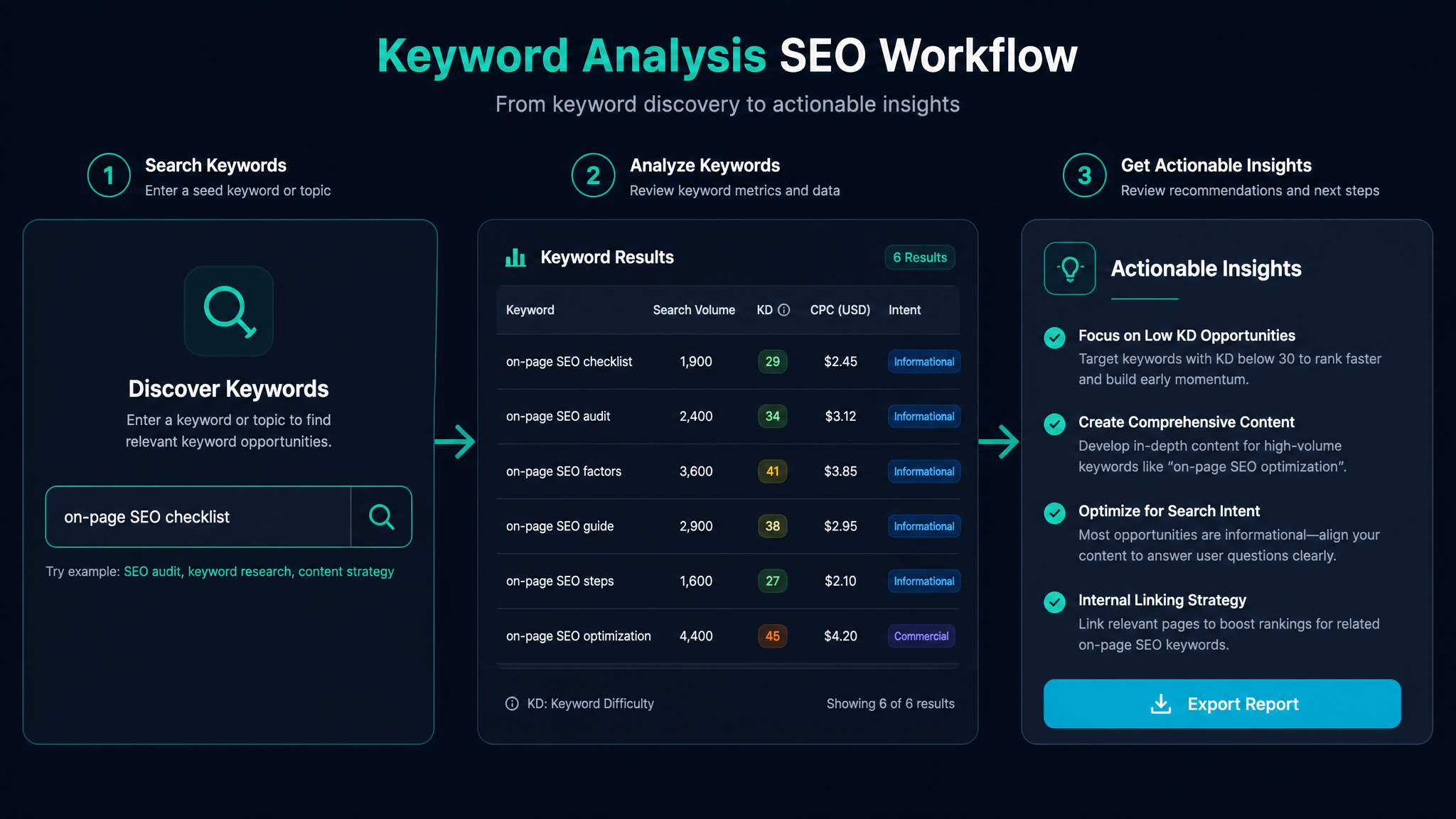
Free ebook: The Free SEO Stack
Keyword research without paying for Ahrefs — the complete guide. Read it online or download the PDF.
100% free · No spam · Unsubscribe any time
If you’ve ever sat staring at your Google Analytics, nursing a lukewarm tea and wondering why your lovingly crafted content gets about as much search traffic as a dial-up modem in 2026, join the club. An Ahrefs study peered under the internet’s bonnet and found that a whopping 90.63% of pages get zero organic traffic from Google. That’s not a typo—it’s a digital graveyard. The culprit? Not shoddy writing or slow sites (though those don’t help), but targeting keywords no one actually searches for, or worse, aiming at the right keywords but with the wrong intent.
Let’s change that. This guide gives you a repeatable, budget-friendly process for spotting keywords that actually drive real traffic and sales, with a distinctly British flavour. By the end, you’ll have a hands-on framework you can use this afternoon—whether you’re shipping cuddly toys from Manchester, running a B2B consultancy in Edinburgh, or offering dog grooming in Cardiff.
Table of Contents
What Is Keyword Analysis and Why Does It Matter in 2026?
Let’s cut through the jargon. Keyword analysis is the art (and science) of finding, weighing up, and ranking the search terms your actual audience is typing into Google. It’s a bit like panning for gold, but with less mud and more spreadsheets. And it’s a fair bit more strategic than flinging spaghetti at the wall and hoping something sticks.
Photo by Jeffrey Ashitey on Pexels
Fast-forward to 2026, and the SEO playing field’s changed yet again. AI Overviews are hogging more of the SERP real estate, zero-click searches (where Google gives the answer straight up—cheeky, right?) are everywhere, and voice search means people are typing and talking in full sentences. If you’re still stuffing keywords like it’s 2012, you’re going to be left behind faster than you can say “algorithm update.”
And here’s what most people miss: keyword analysis isn’t a one-off box-ticking exercise for launch day. It’s your ongoing satnav, guiding your content, site structure, and conversion tweaks. HubSpot found clients who stuck to a structured keyword process grew blog revenue by 254% year over year—yes, you read that right. So if you want your strategy to be, well, strategic (and not just wishful thinking), this is where to start.
The Essential Keyword Metrics You Need to Understand
Ready to get your hands dirty? Before we dive in, let’s tackle the numbers that actually matter. Think of these as the dials on your SEO cockpit. If you don’t understand them, you’re flying blind.
Search Volume is the monthly search average for a term. But beware: averages can be sneakier than a fox in a chicken coop, especially for seasonal searches. “Christmas party venues London” might read 2,000 searches a month, but those clicks all pile in during October and November. And don’t get caught using US data—“football boots” in the UK is a whole different beast from “soccer cleats” in the States.
!Abstract visualization of data analytics with graphs and charts showing dynamic growth.
Photo by Negative Space on Pexels
Keyword Difficulty (KD) is your in-tool guesstimate of how tough it’ll be to crack the top ten. It’s usually based on who you’re up against and how beefy their domains are. If you’re a big fish in a small pond, a high KD might not scare you. For most, though, picking lower KD words is like choosing the hill you can actually climb today.
Cost-Per-Click (CPC) isn’t just for paid ads—it’s a handy crystal ball for how valuable a keyword is commercially. If it’s £5 a click, someone’s making money. If it’s 10p, probably not a buyer in sight. Treat CPC like a weather forecast: useful, but don’t bet your house on it.
Search Intent: here’s the real difference-maker. Every search is either someone looking to learn (informational), go somewhere specific (navigational), research a purchase (commercial), or actually buy (transactional). Show up with the wrong type of content and you’ll be ignored—like turning up to a black-tie event in your gym kit.
Don’t forget Click-Through Rate Potential. SERP features—think featured snippets and local packs—can hoover up clicks before you get a look-in. A keyword might show 5,000 monthly searches, but with a featured snippet and map pack at the top, your blue link might pull in less than 10%. Always snoop on the live SERP before you commit.
Step-by-Step Guide: How to Do Keyword Analysis in SEO
Step 1: Build Your Seed Keyword List
Every keyword adventure starts with a seed list—the core terms that sum up your business, what you sell, and the headaches you solve for UK customers. Write down what you offer, plain and simple. If you’re a Bristol plumber, start with “emergency plumber Bristol,” “boiler repair,” and “radiator installation.”
But don’t stop at your own navel. Eavesdrop on your customers: read reviews, scan support emails, and listen to how THEY describe their problems. You might discover people search for “taps that won’t stop dripping” rather than “leaking tap repair.” Your competitors’ menus and service pages also give away their keyword hand—peek and take notes.
Oh, and mind the language gap: UK spellings and regional slang matter. It’s “colour” not “color,” “flat” not “apartment.” If you’re targeting Brits, sound like one. Aim for 10-20 solid seeds that cover your main site sections.
Step 2: Expand Your List Using Keyword Research Tools
Seed list in hand? Now it’s time to turn those acorns into an oak tree. Fire up your keyword tools. For UK data, Google Keyword Planner is the trusty old measuring jug—free and location-filtered. Paid tools like Ahrefs and Semrush are like Swiss Army knives with extra gadgets (KD, click metrics, and even some competitor secrets). Ubersuggest sits somewhere in the middle and won’t empty your wallet.
Whatever you use, always switch the location to United Kingdom. In Ahrefs, pick the UK (country code 2826). In Semrush, set the database to UK. If you skip this, you’ll be chasing ghosts: global data tells you nothing about who’s actually searching here.
Don’t sleep on question-based and long-tail suggestions. Keywords with “how,” “what,” “why,” and “can” snare voice searches and those chatty AI queries. “Boiler repair” might branch into “how much does boiler repair cost UK?” or “why is my boiler pressure dropping?” And remember: no single tool is the gospel. Cross-check between them and use your own brain, too.
Step 3: Analyse Search Intent for Every Keyword
Here’s where most people slip up: not matching content to intent. For every keyword on your list, open a private browser window, set your location to the UK, and Google it. What’s filling the top five spots? Blog posts? Online shops? Comparison pages?
If it’s mostly blogs and guides, the intent is informational. If it’s product pages with prices and shiny ‘add to basket’ buttons, it’s transactional. Category pages? That’s commercial investigation. Your content needs to fit the mood—write a long guide for a term dominated by product pages and you’ll be the odd one out.
Misaligning intent is like showing up at a vegan picnic with a sausage roll. Google won’t bite, and neither will your audience.
Step 4: Evaluate Keyword Metrics and Prioritise
Now you’ve got the lay of the land, time to pick your battles. Build yourself a simple scoring table—think of it as your keyword leaderboard—where you weigh up search volume, KD, intent alignment, and how much each term actually matters to your business.
Chasing big volume is nice, but the real gold is often in the low-hanging fruit. For UK sites, keywords with 100–500 monthly searches and a KD under 30 are usually the quickest wins. These are like the pub quizzes you can actually win, not the national championships.
Group your winners into clusters around a core topic. So “boiler servicing” could become a hub with “boiler service cost UK,” “how often should a boiler be serviced,” “gas boiler service near me,” and “boiler service checklist.” Google loves a site that covers a whole subject, not just a single angle.
Step 5: Perform Competitor Keyword Gap Analysis
Ready for some digital detective work? Time to discover what your competitors rank for that you don’t. Identify your top three to five UK rivals—not necessarily the biggest brands, but those regularly snatching the positions you want.
Semrush and Ahrefs both have ‘keyword gap’ or ‘content gap’ features: pop in your domain, stack it against your rivals, and see what you’re missing. Prioritise gaps that match your business and have a sensible KD. “Landlord gas safety certificate cost London” is a winner… if you offer that service.
But don’t just copy-paste someone else’s list. Validate every term for your own market, your customers, and your business goals. What suits a national chain could be a dead-end for a local outfit.
How to Do Keyword Analysis on a Limited Budget
No fancy tools? No problem. You can still do solid keyword analysis for the price of a Greggs sausage roll (that is, nothing).
Start with Google Keyword Planner: it gives you UK search volume and competition data for free. Pair it with Google Search Console, which shows the exact queries already earning you impressions and clicks. Look for keywords where you’re hovering just outside page one (positions 10–20)—these are your “nearly theres,” where a quick content refresh could tip you over the edge.
Google Trends is your time machine. Set it to the UK and see what’s rising in your sector. You’ll spot the seasonal waves—"Christmas delivery deadlines” peaking in November, “summer holiday deals” spiking in January. For more question-led ideas, AnswerThePublic wrings every last conversational query out of your seed terms. It’s like overhearing every customer conversation at once, but without the awkward small talk.
There are limits, of course. Google Keyword Planner gives ballpark volume ranges, not precise numbers, and Search Console only shows queries you already rank for. Fill in the blanks by poking around the SERPs yourself—if the competition looks weak, you might be in with a shot. Focus on keywords where you already have some traction or where the current top results are, frankly, a bit pants.
Avoiding Common Keyword Analysis Mistakes
Let’s play “spot the facepalm.”
Keyword cannibalisation: This happens when you have several pages all gunning for the same keyword, splitting your SEO firepower. Run a quick check by googling site:yourdomain.com “keyword.” If multiple pages show up, combine or clearly split their focus.
Ignoring UK-specific language: You can’t out-American the Americans, so don’t try. “Optimisation” and “centre” will always beat “optimization” and “center” for UK searches. Google’s clever, but it still notices the details.
Chasing volume over intent: The digital equivalent of fishing with a net so wide you catch nothing useful. A 5,000-search transactional keyword is worth more than a 50,000-search informational one if you sell products.
Missing out on seasonal and trending keywords: Don’t leave “no-fault eviction changes 2026” to the last minute. Set up Google Trends alerts and keep an eye on industry news to spot topics before they go mainstream.
Not tracking ROI: If you’re only watching rankings and ignoring what’s actually converting, you’re just playing with numbers. Use Google Analytics to link keyword performance to real business KPIs—enquiries, sign-ups, sales.
How to Measure the Success of Your Keyword Analysis
Let’s get specific. What does a win look like?
Short term: Check Google Search Console for ranking improvements, more impressions, and bumps in click-through rates for your target keywords. In your first three months, celebrate moving up—even if you’re not bagging position one yet.
Medium term: Track organic traffic growth to your optimised pages, plus time on site and bounce rate. If traffic’s up but readers vanish after two seconds, revisit your intent match.
Long term: Measure what matters—conversions from organic search, revenue per keyword, and customer acquisition cost. Build a monthly report that tracks your 10–15 key terms against business outcomes. Review quarterly, update your keyword sets, and keep your SEO flywheel turning. Keyword analysis isn’t a fire-and-forget job—the market keeps moving, and so should you.
Frequently Asked Questions About Keyword Analysis
Think of keyword research as treasure hunting (finding all the shiny potential terms, brainstorming, using tools). Keyword analysis is the sorting and valuing phase—deciding which gems are real gold and where they fit in your strategy.
Keep it focused: one or two main keywords, plus three to five closely related secondaries, all building out a topic cluster. Don’t create a new page for every permutation—that’s keyword stuffing, not strategy.
Absolutely. Google Keyword Planner, Search Console, Trends, and AnswerThePublic give you all the essentials. Sprinkle in your own SERP checks, and you’re set.
Give your core keywords a thorough review every quarter, and check for new trends or seasonal shifts every month. New competitors, algorithm changes, and shifting customer habits all mean you need to stay on your toes.
Definitely. Google’s AI might present results differently, but it still leans on keywords and topical authority to decide who ranks. Speaking your audience’s language is more important than ever.
Conclusion and Next Steps
Keyword analysis isn’t just SEO busywork—it’s the bedrock of strategies that actually deliver. To win in the UK, you need to speak the right language, tap into regional search quirks, and size up your local competition with a cold, hard eye.
So, three things you can start today: jot down your seed keyword list (using your customers’ actual lingo), run a Google Keyword Planner export with UK filters, and audit your content to see if each page matches what the searcher’s really after. For more deep dives, take a look at our guides on competitor keyword analysis for UK businesses and our comparison of the top SEO keyword tools available in 2026.
Free tools to put this into practice
Reading is one thing — testing your own pages is what moves the needle. Here are the free KeywordNumbers tools that pair best with this guide:
Every one of our free SEO tools is genuinely free to use, with no sign-up required.
Try the Keyword Gap Analysis Tool
Good news — there's now a free tool for exactly this. Give our Keyword Gap Analysis Tool a go and put this guide straight into practice.
Free ebook: The Free SEO Stack
Keyword research without paying for Ahrefs — the complete guide. Read it online or download the PDF.
- Which free tools replace Ahrefs, SEMrush & Moz
- Step-by-step keyword research workflow
- How to find content gaps without paying a penny
- The exact stack KeywordNumbers is built on
100% free · No spam · Unsubscribe any time
Ready to research your keywords?
Try our free keyword tools — no signup required.