How to Find High-Volume Keywords: Stop Chasing Unicorns, Start Bagging Real Traffic
Print / Save as PDFInsider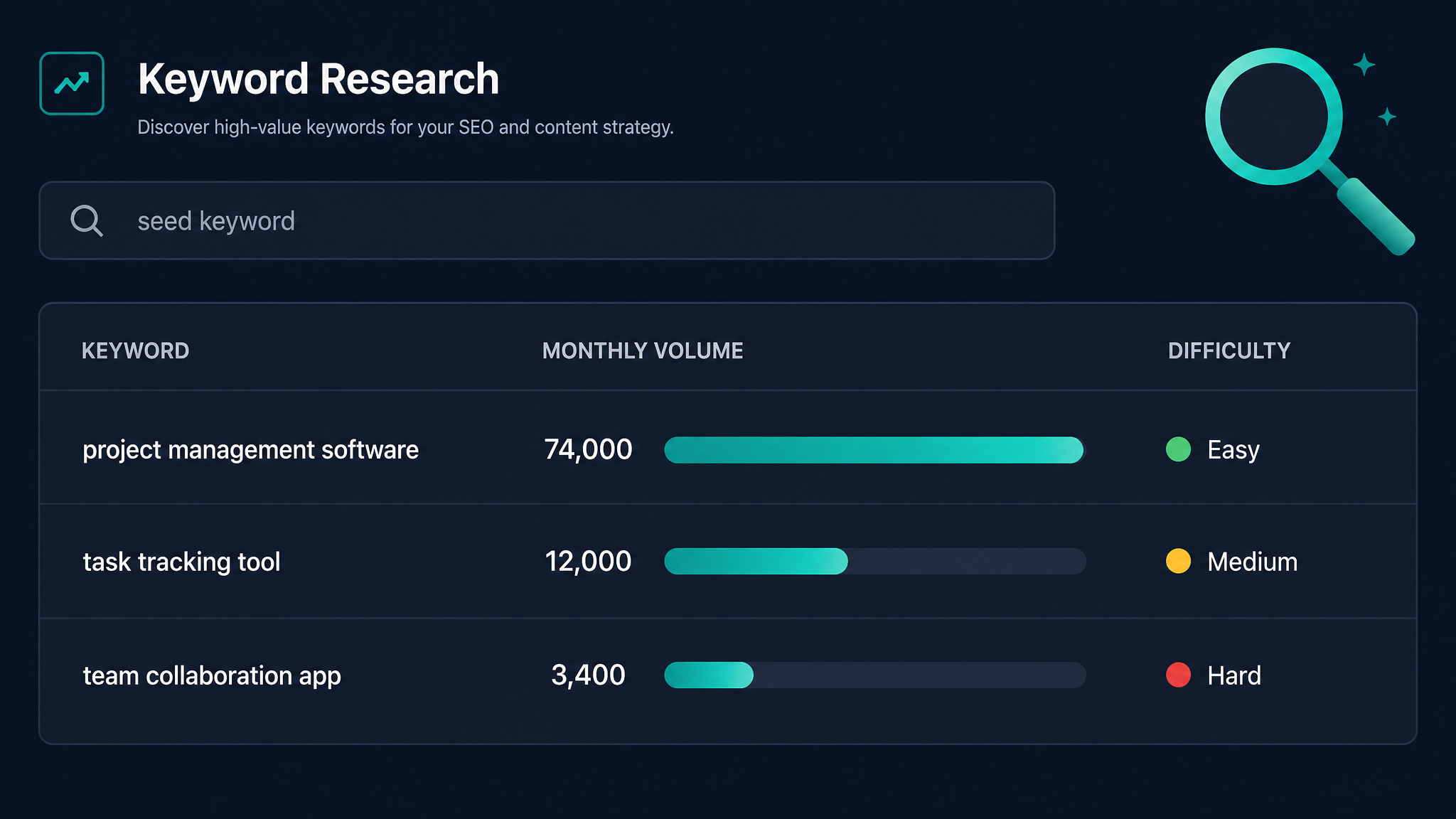
Free ebook: The Free SEO Stack
Keyword research without paying for Ahrefs — the complete guide. Read it online or download the PDF.
100% free · No spam · Unsubscribe any time
"Best running shoes" gets 50,000 monthly searches. "Best running shoes for flat feet" clocks in at 2,000. Add "arch support under £150" and—boom—you’re down to 300.
Here’s what most people miss: Just because a keyword’s got a big number next to it doesn’t mean it’ll make you rich (or even mildly famous).
If a keyword’s the equivalent of Oxford Circus at rush hour—heaving with people, sure, but you can’t actually get anywhere—then what you need is a shortcut no one else has spotted yet.
A keyword with 100,000 monthly searches is a shiny decoy if:
On the flip side, a keyword with just 1,000 searches a month is a secret gold mine if:
Search volume matters—but on its own, it’s about as useful as a chocolate teapot. You need difficulty, intent, and competition in the mix too.
Why Bother With Search Volume At All?
Because it’s the potential. Imagine search volume as the number of people walking past your shop window. If 5,000 stroll by every month, you could pull in 500–1,500 of them if your window display (read: ranking) is good enough. Only a trickle? Not much point, unless you’re selling Fabergé eggs.
How to Check Search Volume: 5 Ways That Actually Work
1. Google Keyword Planner (Free & Official—But Fiddly)
Google’s own tool. The source of truth, but a bit like using a lawnmower to trim your eyebrows—overkill for some, necessary for others.
You’ll get monthly volume, competition (low/medium/high), and some keyword ideas.
2. KeywordNumbers (Free, No Annoying Signup)
One-stop shop for fast keyword checks. It’s like having a Swiss Army knife for SEO—keyword data, plus 13 other tools, all under one roof.
3. Google Trends (Free, For Spotting Surges)
Google Trends is the weather forecast for keywords. No raw numbers, but you’ll spot if you’re about to get rained on or if it’s just a passing shower.
4. Answer the Public (Free for FAQ Gold)
This tool maps out questions people are actually asking. It’s less a shovel, more a metal detector for content ideas.
5. Paid Tools (Ahrefs, Semrush, Moz: The All-You-Can-Eat Buffet)
If you want the works—search volume, trends, keyword difficulty, backlinks, and competitive analysis—these are your heavy hitters. A bit like hiring a private investigator instead of just Googling your ex.
How to Read & Interpret Search Volume (Without Falling Into the Trap)
Search volume can be as misleading as calorie counts on takeaway menus. Here’s what those numbers actually mean:
| Keyword | Monthly Searches | What It Means |
|---|---|---|
| Running shoes | 450,000 | Massive—but the big brands rule the roost |
| Best running shoes | 150,000 | Still huge, still cutthroat |
| Running shoes for flat feet | 12,000 | Good volume, medium-level knife fight |
| Best running shoes for flat feet under £100 | 1,200 | Niche, real traffic potential |
| Running shoe inserts for flat feet | 800 | Modest, but easier to snag |
Here’s the trick: 150,000 searches might look juicy until you see who’s top—Nike, Brooks, Zappos, the works. You’ll be lucky to get a sniff.
But that 1,200-volume keyword could mean 120–300 clicks a month if you bag the top spot. For a fitness shop, that’s more than just pocket change.
Search Volume Myths: Let’s Put These to Bed
Not even close. If you get a keyword with 500 monthly searches ranking #1, that’s 50 clicks a month—that’s 600 warm bodies a year. For a lot of businesses, that’s gold.
Nope. All tools fudge the numbers—ranges, estimates, best guesses. Google Keyword Planner won’t even give you the full Monty.
Usually, but not always. Sometimes new or weirdly niche topics fly under the radar.
Wrong again. If you sell snowboards, you want "best snowboards" when it’s snowing, not in July.
Nice idea, but you’ll end up writing for an audience of one—your mum.
High Volume ≠ Easy Rankings: The Competition Crunch
Here’s the harsh truth: Big search volumes are a magnet for big players.
A keyword with 100,000 searches? Expect:
But 2,000 monthly searches? Suddenly, it’s small blogs and mid-tier contenders. Less muscle needed. Difficulty 30–40.
A 2,000-search keyword where you can rank in 8 weeks = real traffic, fast. A 100,000-search keyword where you’ll never crack the top 10 = pipe dream.
How to Actually Find the Sweet Spot (High Volume and Low Difficulty)
Everyone’s after it: keywords with 1,000+ monthly searches and difficulty under 40. Like a unicorn that pays rent on time.
How you dig them up:
Find one like this? Stop reading and start writing. They’re rare as hen’s teeth.
Patterns matter: The more specific, the easier to win, but still enough volume to make it worthwhile.
Seasonal Keywords: When Search Volume Goes Haywire
Some keywords spike harder than Glastonbury ticket sales. If you’re not watching for seasonality, you’ll miss the party.
Open Google Trends, plug in your keyword, check the rollercoaster.
Yes, if:
No, if:
Using Search Volume to Actually Plan Content (Not Just Stare at Spreadsheets)
Let search volume steer your content priorities, not just fill a column in your Google Sheet.
Free tools to put this into practice
Reading’s grand, but you won’t get far if you never check your own keywords. Here’s the free kit from KeywordNumbers to get your hands dirty:
And yes, every single free SEO tool on KeywordNumbers is exactly that—free, no forms, no faff.
Try the CTR & Traffic Estimator
Good news — there's now a free tool for exactly this. Give our CTR & Traffic Estimator a go and put this guide straight into practice.
Weighing up Moz? Compare it first
Before you commit to a paid plan, it is worth seeing what else is out there. Read our full guide to the best Moz alternative tools — the free and paid options UK marketers actually use.
Free ebook: The Free SEO Stack
Keyword research without paying for Ahrefs — the complete guide. Read it online or download the PDF.
- Which free tools replace Ahrefs, SEMrush & Moz
- Step-by-step keyword research workflow
- How to find content gaps without paying a penny
- The exact stack KeywordNumbers is built on
100% free · No spam · Unsubscribe any time
Ready to research your keywords?
Try our free keyword tools — no signup required.