Competitor Keyword Analysis Tool: Unmask Your Rivals’ Best-Performing Keywords in Minutes
Print / Save as PDFInsider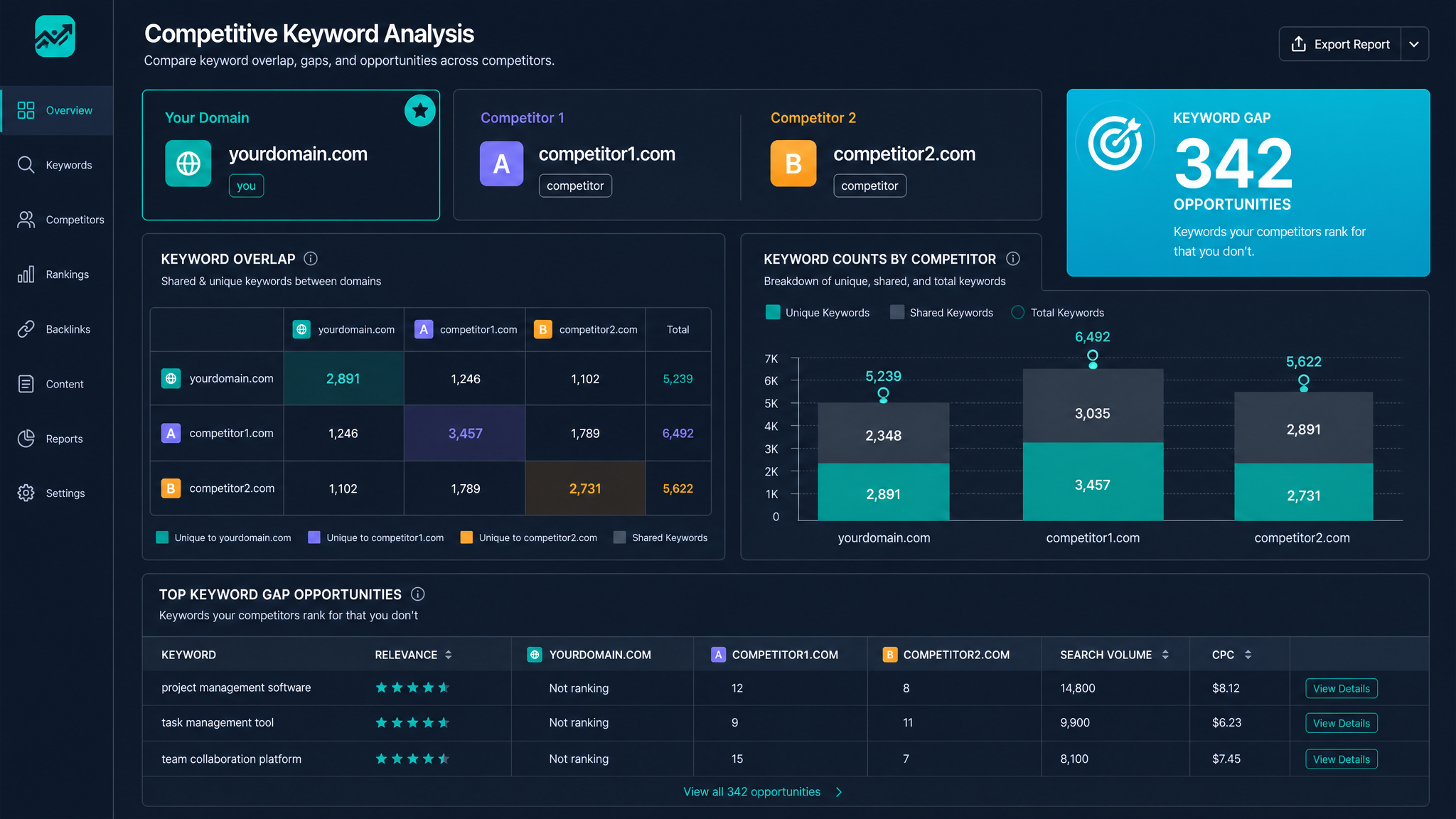
Free ebook: The Free SEO Stack
Keyword research without paying for Ahrefs — the complete guide. Read it online or download the PDF.
100% free · No spam · Unsubscribe any time
Ever felt like your competitors know something you don’t? Spoiler: they probably do—and it’s called a keyword strategy. Luckily, you don’t have to hire a private investigator or dig through their bins. In this guide, you’ll learn how to use a competitor keyword analysis tool to reveal, compare, and (yes) nick your rivals’ best-performing keywords. We’ll cover the practical steps, a worked example with real numbers, and answer the questions people are actually asking.
What Is a Competitor Keyword Analysis Tool, Really?
Bet you didn’t realise: a competitor keyword analysis tool is the SEO equivalent of peeking at your mate’s exam answers—except it’s totally allowed. These tools let you see which keywords your competitors are ranking for, how much traffic those keywords could bring, and where the gaps are in your own content strategy.
Think of it as a treasure map for SEO gold. Instead of guessing which keywords might work, you’re following a path that’s already proven to work for others in your niche.
Why Bother? The Real-World Benefits
Here’s what most people miss: keyword research isn’t just about stuffing your site with random phrases. By analysing competitor keywords, you can:
How to Use a Competitor Keyword Analysis Tool (Step-by-Step)
Ready to start snooping? Here’s how to put a competitor keyword analysis tool to work:
Worked Example: The Proof’s in the Pudding
Let’s walk through a real example. Imagine you run a fitness blog targeting both the UK and US markets. Your main competitor is “fitguru.com.” You plug their URL into the KeywordNumbers Competitor Keyword Analysis Tool and get the following data:
| Keyword | Competitor Rank | Search Volume (UK/month) | Search Volume (US/month) |
|---|---|---|---|
| home workout routines | 3 | 2,100 | 5,400 |
| best protein powder | 5 | 1,800 | 4,800 |
| 30 day fitness plan | 8 | 1,300 | 3,200 |
You notice you don’t rank for “30 day fitness plan” at all. That’s around 1,300 potential UK visitors (or 3,200 US visitors) a month slipping through your fingers—like watching someone else eat your chips.
Armed with this info, you create a new blog post targeting “30 day fitness plan”—and suddenly, you’re back in the running for that juicy search traffic in both metric (UK, EU, AU, etc.) and imperial (US) markets.
What Should You Look for in a Keyword Competitor Analysis Tool?
Here’s what separates the Ferraris from the wheelbarrows:
Pro Tips for Ruthless Keyword Spying
Questions People Are Actually Asking
How do I see which keywords my competitors are ranking for?
Pop their website URL into a competitor keyword analysis tool like the free Competitor Keyword Analysis Tool from KeywordNumbers. It’ll list the keywords they rank for, along with positions and search volumes. No binoculars or trench coats required.
What’s the best free competitor keyword analysis tool?
There are a few decent free options, but for a quick, no-fuss look, try KeywordNumbers’ tool. It’s simple, covers multiple countries, and gives you actionable data—no credit card or awkward sales calls.
Can I use a competitor keyword analysis tool for local SEO?
Absolutely. Many tools let you filter by country or even region. If you’re a plumber in Manchester or a baker in Toronto, you can see exactly which local terms your competitors are ranking for, then swoop in with your own optimised pages.
How accurate are these tools?
No tool is 100% perfect (if it were, we’d all be millionaires). But reputable tools give a very solid ballpark—accurate enough to spot trends, find gaps, and build your keyword strategy. Always treat data as a guide, not gospel.
Is it legal (and ethical) to analyse competitor keywords?
Yes, it’s perfectly above board. You’re not hacking anything; you’re just looking at public data and search results that anyone can access. Think of it as competitive intelligence, not corporate espionage.
How often should I check my competitors’ keywords?
Once a month is a good rule of thumb. If your industry moves fast (think news or tech), check more often. If you’re in a slow-moving niche, quarterly might do it.
Can I use a competitor’s keywords for paid ads as well?
Definitely. Many competitor keyword analysis tools show both organic and paid keywords. Use their data to inform your Google Ads or Bing Ads campaigns—just remember, outbidding them is a whole new game.
What should I do if my competitor is outranking me for every keyword?
Don’t panic (and don’t throw your laptop out the window). Start with lower-difficulty keywords, create better content, and use internal linking. SEO is a marathon, not a sprint—unless you’re Usain Bolt, in which case, sprint away.
Conclusion: Ready to Outsmart, Not Outspend?
Competitor keyword analysis isn’t about copying—it’s about leapfrogging. Use the right tool, act on the data, and you’ll find yourself ranking for the keywords your rivals wish they could keep secret. Ready to get started? Try the free Competitor Keyword Analysis Tool from KeywordNumbers and see what your rivals are hiding.
Free tools to put this into practice
Reading is one thing — testing your own pages is what moves the needle. Here are the free KeywordNumbers tools that pair best with this guide:
Every one of our free SEO tools is genuinely free to use, with no sign-up required.
Try the Keyword Gap Analysis Tool
Good news — there's now a free tool for exactly this. Give our Keyword Gap Analysis Tool a go and put this guide straight into practice.
Check your meta tags for free
Want to see if your metadata is set up correctly? Run any page through our free meta tag checker to check the title tag and meta description length in seconds.
Free ebook: The Free SEO Stack
Keyword research without paying for Ahrefs — the complete guide. Read it online or download the PDF.
- Which free tools replace Ahrefs, SEMrush & Moz
- Step-by-step keyword research workflow
- How to find content gaps without paying a penny
- The exact stack KeywordNumbers is built on
100% free · No spam · Unsubscribe any time
Ready to research your keywords?
Try our free keyword tools — no signup required.