Find Question Keywords UK: The Shortcut to SEO Gold (Without Guesswork)
Print / Save as PDFInsider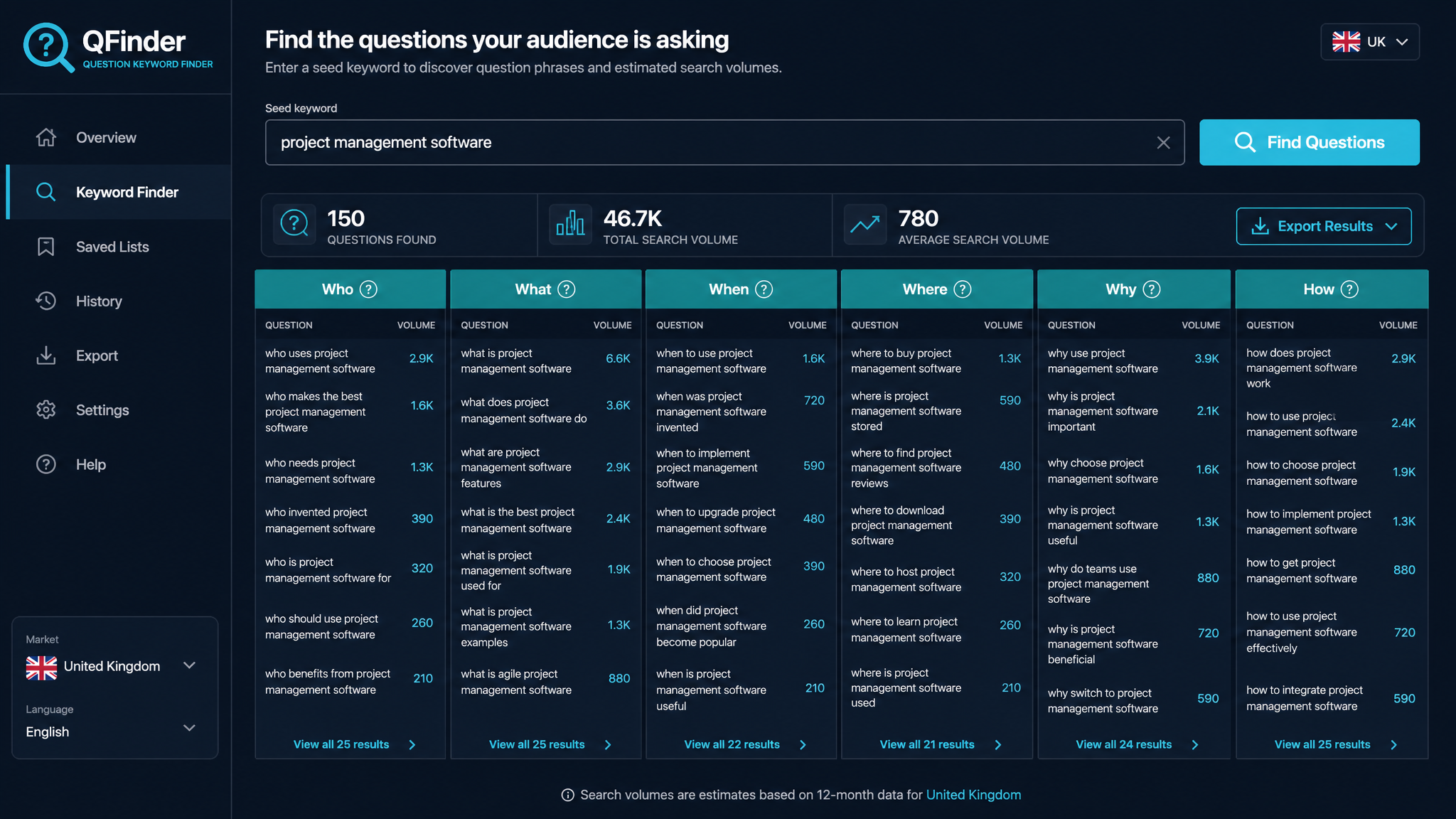
Free ebook: The Free SEO Stack
Keyword research without paying for Ahrefs — the complete guide. Read it online or download the PDF.
100% free · No spam · Unsubscribe any time
Ever feel like keyword research is a bit like fishing in the Thames with a shoelace and a paperclip? You know there are prize catches beneath the surface, but most of the time you just reel in weed and lost hubcaps. If you want to pull in the questions people are actually typing into Google—the ones that get you in front of prospects at the exact moment they want answers—then you need a proper question keyword finder. Not guesswork. Not mind-reading. And absolutely no shoelaces required.
In this guide, you'll learn:
Let’s get straight to it.
Why Question Keywords Are SEO Gold (and How They’re Different)
Here’s what most people miss: question keywords aren’t just another box on your keyword checklist. They’re the signal flares of search intent. When someone Googles “how to fix a leaking tap UK” or “what’s the best energy deal for renters”, you know exactly what they want—and you can deliver it, no mind-reading required.
Think of question keywords as Google’s way of handing you a cheat sheet for your audience’s problems. They’re perfect for:
Bottom line: if you’re not using question keywords, you’re leaving conversions on the table. No exceptions for “but my site’s really good”.
How to Find Question Keywords for the UK (The Fast Way)
Bet you didn’t realise how many people type full-on questions into Google every day. To catch them, you need to:
Example: Finding UK Question Keywords for ‘Running Shoes’
Let’s run through a real example (pun intended). Imagine your site sells trainers. You plug “running shoes” into the question keyword finder and set the region to UK. Here’s what comes up:
| Question Keyword | Avg. Monthly Searches (UK) |
|---|---|
| what are the best running shoes uk | 1,300 |
| how to clean running shoes | 900 |
| can running shoes go in the washing machine | 500 |
| how to choose running shoes for flat feet | 350 |
| when to replace running shoes | 400 |
And just so we’re all on the same page: 1,300 monthly searches is about 43 per day, or roughly enough people to fill a double-decker bus, every day, all wondering what trainers to buy. Now you know exactly what content to create—and what your next blog headline should be. No more guesswork, no more “spray and pray” content.
Tools and Tactics: Your Toolkit for UK Question Keyword Research
So, what’s the best way to hunt down these question gems?
Quick Comparison Table:
| Tool/Method | UK Data? | Free? | Best For |
|---|---|---|---|
| KeywordNumbers Question Finder | Yes | Yes | Fast, multi-topic, export |
| Google Suggest | Yes | Yes | Quick inspiration |
| People Also Ask | Yes | Yes | Snippet targeting |
| Reddit/Forums | Indirect | Yes | Real-life language |
| Answer The Public | Yes | Limited | Visual brainstorming |
How to Use Question Keywords in Content (Without Awkwardly Cramming Them In)
Here’s the mistake most people make: they find a goldmine of question keywords, then try to shoehorn them into every paragraph like it’s a game of SEO Tetris. Don’t. Instead, treat question keywords like seasoning, not the main course.
Pro tip: Don’t change the question just for the sake of “uniqueness”. Google wants to see the question as people type it, not your creative remix.
Questions People Are Actually Asking (FAQ)
How to search for keywords?
Start with a tool like KeywordNumbers’ Question Finder or Google Keyword Planner. Enter your topic, review the suggestions, and look for questions, search volumes and intent. For UK-specific data, always set the region to UK if the tool allows.
How to search for keywords on Quizlet?
On Quizlet, use the search bar at the top of the site. Enter your keyword or topic and Quizlet will show relevant study sets, classes and users. This is more about educational content than SEO, but the principle is the same: start broad, then refine.
How to find keywords?
Use a keyword research tool (see above), Google search suggestions, or even competitor analysis. For question-specific keywords, tools like KeywordNumbers’ finder pull the latest “how”, “what”, and “why” queries people are actually searching.
How to determine keywords?
Look at search volume, competition, and intent. Ask: does this keyword match what my target audience wants? For question keywords, prioritise those that match your product/service and have a clear intent (e.g. “how to choose the best mortgage uk”).
How to quickly search for keywords?
Short on time? Use an automated question keyword tool like KeywordNumbers—just enter your seed topic, hit search, and you’ll get a list of real questions in seconds. Export and filter as needed.
How to check keywords?
Check keyword metrics (search volume, difficulty, CPC) using your preferred tool. Then, search for those keywords in Google to see what content ranks—this shows you what you’re up against and what Google thinks answers the question.
How to use keywords in search?
If you’re searching for something, add keywords or questions to the search bar. If you’re creating content, incorporate those keywords naturally into titles, headings and answers. The aim: match the searcher’s language and intent.
Conclusion: Stop Guessing—Start Answering
If you want to rank, get featured snippets, or simply attract more qualified visitors, question keywords are your secret weapon. They’re the difference between shouting into the void and actually joining the conversation your customers are having.
Ready to find out what people are really asking? Give the Question Keyword Finder a spin. You’ll never go back to fishing with shoelaces.
Free tools to put this into practice
Reading is one thing — testing your own pages is what moves the needle. Here are the free KeywordNumbers tools that pair best with this guide:
Every one of our free SEO tools is genuinely free to use, with no sign-up required.
Check your meta tags for free
Want to see if your metadata is set up correctly? Run any page through our free meta tag checker to check the title tag and meta description length in seconds.
Free ebook: The Free SEO Stack
Keyword research without paying for Ahrefs — the complete guide. Read it online or download the PDF.
- Which free tools replace Ahrefs, SEMrush & Moz
- Step-by-step keyword research workflow
- How to find content gaps without paying a penny
- The exact stack KeywordNumbers is built on
100% free · No spam · Unsubscribe any time
Ready to research your keywords?
Try our free keyword tools — no signup required.