How to Analyse Competitor Keywords: The Sneaky Shortcut to Outranking Rivals
Print / Save as PDFInsider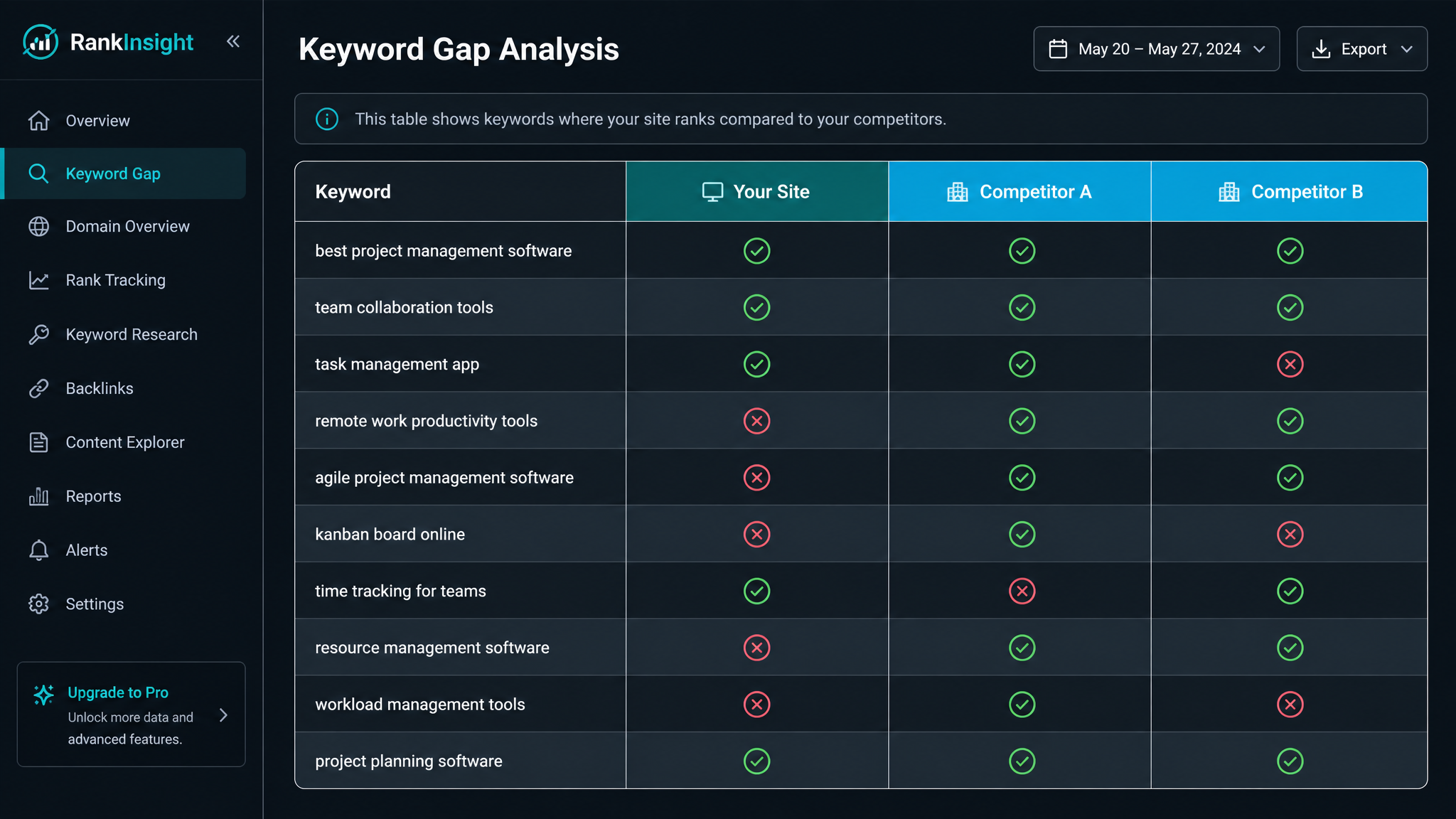
Free ebook: The Free SEO Stack
Keyword research without paying for Ahrefs — the complete guide. Read it online or download the PDF.
100% free · No spam · Unsubscribe any time
Ever peeked at your competitor's site and thought, "How on earth are they always at the top of Google?" You're not alone. Analysing competitor keywords is like borrowing their recipe and then adding a secret ingredient — suddenly, you've got a shot at a Michelin star. In this no-nonsense guide, I'll walk you through exactly how to analyse competitor keywords (step by step, tea in hand), show you what to look for, and give you a real-world example so you can pinch their best moves for your own SEO menu.
Why Bother Analysing Competitor Keywords?
Here's what most people miss: knowing which keywords are fuelling your competitors' traffic is less about envy and more about opportunity. It's your chance to:
Think of it as spying on their shopping list before you hit the shops — why guess what's working when you can just look?
Step-by-Step: How to Analyse Competitor Keywords Like a Pro
1. Pin Down Your True Competitors
Not every site in your space is a real rival. Focus on:
A quick Google search for your main keywords usually reveals who's elbowing you aside. Or cheat a bit and use the KeywordNumbers Competitor Finder — it's like Tinder for SEO enemies.
2. Get Their URLs (No, Not for Stalking)
Jot down each competitor's main website address. For giant sites, zero in on specific service or product pages that overlap with your own. There's no point comparing your local bakery to Tesco's homepage.
3. Use Free Tools to Uncover Their Keyword Arsenal
You could splash the cash on big-name tools, but let's be honest — you want results, not a subscription headache. For a free, fuss-free approach, try the KeywordNumbers Competitor Keyword Tool. Here's how to play detective:
If you're feeling flush, Ahrefs, SEMrush, and Moz have bells and whistles galore (and price tags to match). But start free — you'd be amazed how much you can learn before opening your wallet.
4. Dig Into the Numbers That Matter
It's easy to get lost in the data swamp, so keep your eye on these:
If a keyword is "best running shoes" and gets 20,000 searches a month, that's a gold mine. If it's "pink shoelaces for size 13 trainers"... well, that's more of a quirky side hustle.
5. Hunt for Content Gaps and Golden Opportunities
Now for the fun bit: compare their keyword list with your own rankings. Look for:
Highlight these as your next content targets. If they're ahead of you, it's time to play catch-up. If they're missing a trick, it's your turn to leapfrog them.
6. Build Your Battle Plan (Spreadsheet Style)
Create a simple tracker — a spreadsheet will do, or use a tool if you fancy. Here’s what to jot down:
| Keyword | Competitor Rank | Your Rank | Search Volume | Difficulty |
|---|---|---|---|---|
| best running shoes | 2 | 10 | 20,000 | 32 |
| jogging trainers | 4 | — | 1,400 | 28 |
| cushioned sneakers | 5 | — | 900 | 24 |
Spot where you’re trailing, or not even in the game, and flag those for new content or a revamp. Prioritise the quick wins, but don’t ignore the long-haul plays.
Worked Example: Stealing a March on a Running Shoe Shop
Let’s say you’re running a UK online running shoe shop, and runnersparadise.co.uk is always a step ahead. Here’s how you’d quietly borrow their thunder:
| Keyword | Rank | UK Volume | US Volume |
|---|---|---|---|
| best running shoes | 2 | 20,000 | 30,000 |
| men’s running trainers | 3 | 8,500 | 12,000 |
| cushioned running shoes | 4 | 1,200 | 2,100 |
Tips for Analysing Competitor Keywords Without Losing Your Mind
Questions People Are Actually Asking
How do I analyse competitor keywords?
First, list your main competitors. Then, stick their site into a free tool like the KeywordNumbers Competitor Keyword Tool. You’ll get a list of the keywords they're ranking for. Next, compare these with your own rankings to spot any gaps or juicy opportunities. Simple, but massively effective.
How do I find what keywords my competitors are targeting?
Drop your competitor’s website or a relevant URL into a competitor keyword tool. Review the keyword list it spits out, paying special attention to terms that actually matter for your niche (not just "about us" or "contact page").
How can I see the keywords competitors are ranking for?
Most competitor keyword analysis tools will show you the keywords driving traffic to a site, along with ranking positions and search volumes. This makes it dead easy to see which terms are putting them on the map — and which ones are worth your attention.
How can I find competitors’ keywords in their content?
Dive into their top pages and scan the headings, meta titles, and those terms that keep popping up. Or, let a tool like KeywordNumbers do the heavy lifting by showing you the exact keywords nestled in their content. Much faster than playing spot-the-keyword by hand.
How do I find competitors’ keyword strategies?
Look for their highest-ranking keywords and the types of content they create (blogs, guides, product pages, you name it). See whether they're chasing info-seekers, buyers, or a mix. Notice if they’re clustering related keywords together — that’s often the secret sauce.
How can I see a competitors’ keyword report for free?
Plenty of free tools, including the KeywordNumbers Competitor Keyword Tool, let you run basic keyword reports on any public site. You’ll see rankings, search volume, and how tough it is to compete — no credit card required.
How do I know which keywords competitors are ranking highly for?
Plug each domain into a competitor keyword tool and filter by ranking position or estimated traffic. The top results are the keywords putting your rivals in the spotlight — those are the ones to watch (and chase).
Conclusion
Analysing competitor keywords is like getting a sneak preview of the exam — you still have to do the work, but you know what to revise. By spotting the keywords your rivals rank for, you can close your content gaps, aim for new targets, and slowly but surely climb those rankings. My advice? Fire up the KeywordNumbers Competitor Keyword Tool. It’s free, takes seconds, and might just put you a stride ahead in search.
Free tools to put this into practice
Reading is one thing — testing your own pages is what moves the needle. Here are the free KeywordNumbers tools that pair best with this guide:
Every one of our free SEO tools is genuinely free to use, with no sign-up required.
Try the Voice Search Keywords
Good news — there's now a free tool for exactly this. Give our Voice Search Keywords a go and put this guide straight into practice.
Weighing up Moz? Compare it first
Before you commit to a paid plan, it is worth seeing what else is out there. Read our full guide to the best Moz alternative tools — the free and paid options UK marketers actually use.
Free ebook: The Free SEO Stack
Keyword research without paying for Ahrefs — the complete guide. Read it online or download the PDF.
- Which free tools replace Ahrefs, SEMrush & Moz
- Step-by-step keyword research workflow
- How to find content gaps without paying a penny
- The exact stack KeywordNumbers is built on
100% free · No spam · Unsubscribe any time
Ready to research your keywords?
Try our free keyword tools — no signup required.