Keyword Suggestion Tool for UK SEO: The Secret Sauce Most Marketers Skip
Print / Save as PDFInsider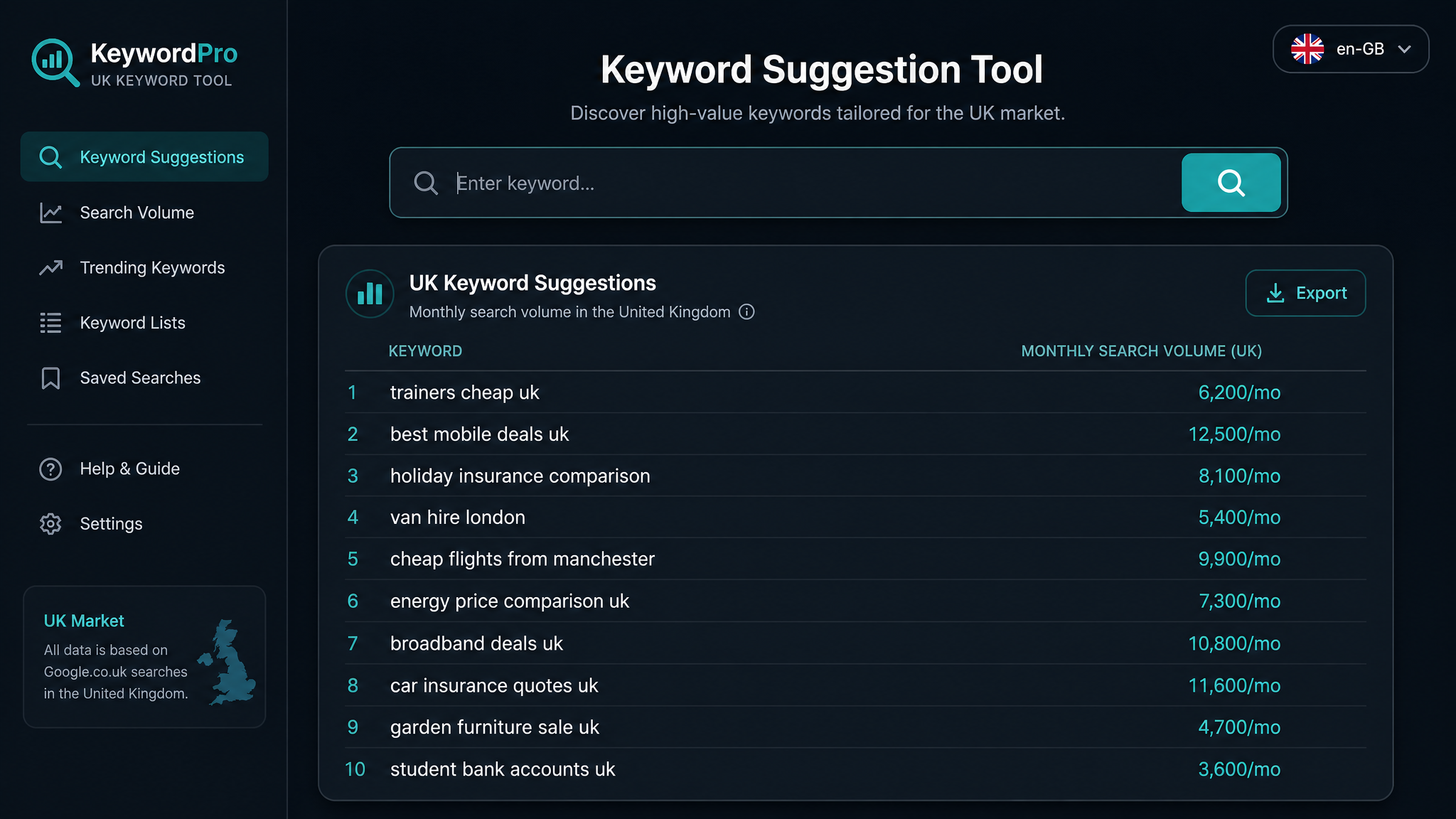
Free ebook: The Free SEO Stack
Keyword research without paying for Ahrefs — the complete guide. Read it online or download the PDF.
100% free · No spam · Unsubscribe any time
Keyword research isn’t exactly what most people dream about at night. But let’s be honest: if you want to move your UK site up the Google ladder, it’s the engine oil, not the cherry on top. The trick? Using a keyword suggestion tool that actually speaks British, not just English. So, grab your cuppa. Here’s how to find the gold your competition keeps tripping over.
Why Bother With a Keyword Suggestion Tool in the UK? (Hint: It’s Not Just About the Spelling)
Ever tried baking a Victoria sponge with American cups instead of grams? Your SEO can feel just as off if you’re not using a tool built for the UK. Whether you’re an SEO consultant, ambitious blogger, or bossing your own business, finding the right keywords is the difference between tea with the Queen or eating toast alone.
A solid keyword suggestion tool will help you:
Generic tools? They’re fine for a quick nosey, but UK-focused tools know their "organise" from their "organize" – and those little details can mean a lot in the rankings race.
Key Features To Look For (So You Don’t Buy a Chocolate Teapot)
Not all keyword suggestion tools are cut from the same cloth. Before you part with your hard-earned quid, check for these must-haves:
One tool that ticks those boxes? The Keyword Numbers Keyword Suggestion Tool. It’s quick, free, and tuned for British searchers — no translation required.
Worked Example: Unearthing UK Keywords for a Gardening Blog (No Green Thumb Needed)
Let’s get our hands dirty with a proper example.
Step 1: Plug In a Seed Keyword
Let’s say you start with “garden fence.” Pop it into your favourite keyword suggestion tool and make sure you’re set to United Kingdom — not accidentally chasing traffic from Texas.
Step 2: Sift Through the Suggestions
Here’s the sort of treasure you might uncover:
| Keyword | UK Search Volume (month) | Keyword Difficulty (1-100) |
|---|---|---|
| garden fence ideas | 3,600 | 32 |
| garden fencing uk | 1,200 | 41 |
| cheap garden fence | 1,000 | 28 |
| garden fence panels | 2,400 | 35 |
| how tall can a fence be uk | 900 | 24 |
Step 3: Mind Your Metres and Feet
In the UK, fences come in metres, but half the country still swears by feet. If you only write about “1.8 metre fence panels,” you’re leaving “6 foot fence panels” fans out in the cold.
| Keyword | UK Monthly Searches |
|---|---|
| 1.8 metre fence panels | 500 |
| 6 foot fence panels | 300 |
Double up on units and you’ll catch more searchers — it’s like putting both ketchup and brown sauce on the table.
Step 4: Pick Your Battles Wisely
Don’t just chase the biggest numbers. Go for keywords with decent search but lower difficulty. “Garden fence ideas” (3,600 searches, KD 32) is a crowd-pleaser. “Cheap garden fence” (1,000 searches, KD 28) could be the sleeper hit you turn into a blockbuster guide.
Step 5: Export and Plan Like a Pro
Download your shortlist, match keywords to blog topics, and start writing with search intent in mind. Planning here is like laying foundations — skimp, and the house wobbles.
How to Use a Free UK Keyword Suggestion Tool (The Quick-Start Version)
Ready to have a play? Here’s the smart way in 5 quick moves:
Why UK-Focused Keyword Research? (It’s Not Just a Flag Emoji)
Questions People Are Actually Asking
What is a keyword suggestion tool?
Think of it as a brainstorming buddy that never gets tired: you feed it a word, and it spits out dozens of related search terms — complete with popularity stats. It’s the shortcut to finding what people are really Googling, so your content isn’t shouting into the void.
Why is local keyword data important for UK SEO?
Because UK users don’t always search like Americans (or Aussies, or Canadians). Local data means your content answers the actual questions your UK audience is typing in — accents, spellings, and all. That’s how you get found (and clicked).
Can I use a free keyword suggestion tool for UK searches?
Absolutely! Keyword Numbers gives you UK search data for free. Perfect for bloggers, small business owners, or anyone who likes results without the price tag.
How can I find keywords with both metric and imperial units?
Just enter both versions (like "1.8 metre fence" and "6 foot fence") as your seed keywords. Good tools — the kind that don’t clock off early — will show you search data for both, so you can write for every kind of searcher.
What is keyword difficulty and why does it matter?
Keyword difficulty is the digital equivalent of measuring a hill before you climb it. Lower scores mean you’re more likely to get your content on page one; high difficulty means you’ll need more muscle (or backlinks).
Should I target broad or long-tail keywords?
Bit of both. Broad keywords pull in volume but come with heavy competition. Long-tail terms are more specific — less traffic, but your odds of ranking (and converting) shoot up, especially if your topic’s a bit niche.
How often should I update my keyword research?
Think of it like checking your oil — every 3-6 months is a smart move, or any time your stats or business goals change. Staying on top keeps your content current and your traffic ticking over.
Conclusion: Start Your UK Keyword Research Today
Keyword research doesn’t have to feel like pulling teeth. With a free, UK-tuned keyword suggestion tool, you can spot high-value opportunities, write content that actually lands, and nudge your rankings upward without blowing the budget.
Ready to try it for yourself? Keyword Numbers Keyword Suggestion Tool is waiting. It’s free, simple, and — best of all — made for British SEO.
Free tools to put this into practice
Reading’s all well and good, but getting your hands dirty is where the magic happens. These free KeywordNumbers tools are the perfect sidekicks:
Every one of our free SEO tools is truly free, no sign-up, no fuss. Fancy that.
Try the Voice Search Keywords
Good news — there's now a free tool for exactly this. Give our Voice Search Keywords a go and put this guide straight into practice.
Free ebook: The Free SEO Stack
Keyword research without paying for Ahrefs — the complete guide. Read it online or download the PDF.
- Which free tools replace Ahrefs, SEMrush & Moz
- Step-by-step keyword research workflow
- How to find content gaps without paying a penny
- The exact stack KeywordNumbers is built on
100% free · No spam · Unsubscribe any time
Ready to research your keywords?
Try our free keyword tools — no signup required.