Meta Keywords Analysis: Why Chasing Ghosts Won’t Boost Your Rankings in 2024
Print / Save as PDFInsider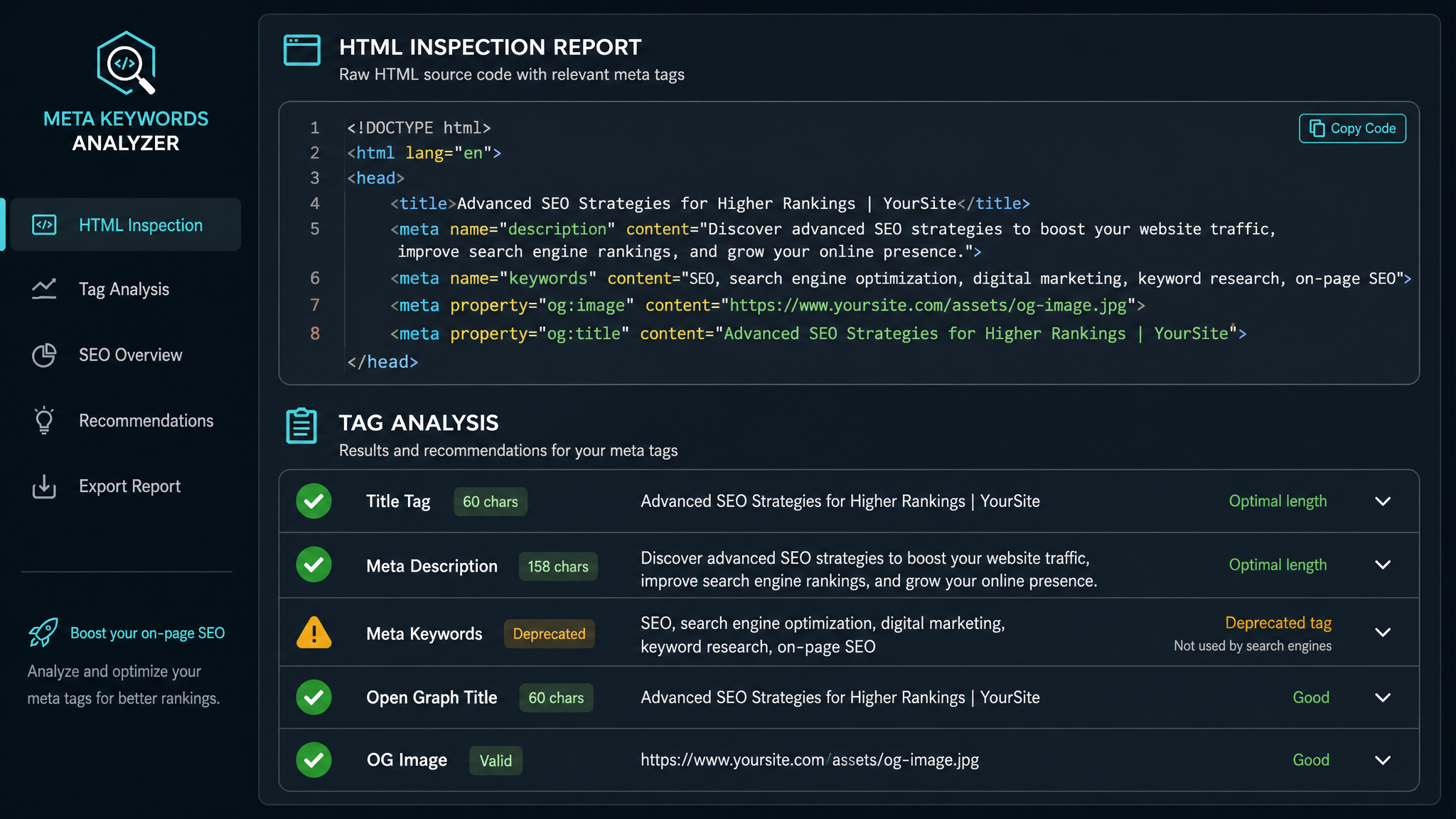
Free ebook: The Free SEO Stack
Keyword research without paying for Ahrefs — the complete guide. Read it online or download the PDF.
100% free · No spam · Unsubscribe any time
Meta keywords analysis – sounds technical, right? Like a secret handshake for getting Google’s attention. But here’s the kicker: these days, worrying about meta keywords is like bringing a pager to a smartphone party. In this guide, I’ll show you what meta keywords really are, why they mattered once (but don’t now), and how proper keyword analysis can actually move the SEO needle for you in 2024. Let’s clear up the confusion, dodge some common traps, and get you targeting keywords that actually get results.
What Are Meta Keywords? (And Why Did People Care?)
Let’s go back to the early days of the internet – when search engines were still wearing digital nappies. Meta keywords are meta tags – those little code snippets you’d sneak into the section of your web page, hoping search engines would gobble them up and send you traffic. Like this:
`html
`
Back then, this tag was like whispering your wish list to Google and hoping for the best. Trouble was, because users couldn’t see these tags, it was too tempting to cram in every keyword under the sun – think “SEO, SEO tips, free SEO, not spam I promise.” Predictably, search engines wised up. These days, they treat meta keywords about as seriously as horoscopes in a science journal.
Are Meta Keywords Still Important for SEO? (Spoiler: Nope)
Still holding out hope for meta keywords? Time to let go. Google ignores them completely. Bing and Yahoo barely raise an eyebrow. Modern SEO now revolves around quality content, satisfying search intent, and nailing your on-page basics – title tags, meta descriptions, headings, and weaving keywords naturally into your copy (not stuffing them in like a turkey at Christmas).
Here’s how the main meta elements stack up:
| Meta Element | Still Used by Google? | SEO Impact |
|---|---|---|
| Meta Keywords | ❌ No | None |
| Title Tag | ✅ Yes | Very High |
| Meta Description | ✅ Yes (for display) | Medium |
| Heading Tags (H1-H6) | ✅ Yes | High |
If you’re using something like WordPress or Shopify, you can safely ignore any field labelled ‘meta keywords’. Put your energy where it counts.
Meta Keywords Analysis: What Does It Actually Mean in 2024?
Here’s what most people miss: when someone asks about “meta keywords analysis” these days, what they really need is classic keyword analysis. That means figuring out which search terms your audience actually uses, and how to use those words to get your site noticed. No head-in-the-code required.
Modern Keyword Analysis (The Good Stuff)
Real keyword analysis involves:
Think of keyword analysis like choosing the right fishing spot: you want somewhere with plenty of fish (search volume), but not so many other fishermen (low competition) that you’ll never get a bite. To make life easier, you can use free tools like the Keyword Difficulty Checker on KeywordNumbers. Pop in a keyword, and you’ll see at a glance which ones are catchable – and which are all hype, no hope.
Worked Example: Analysing Keywords for a Running Blog
Let’s get practical. Suppose you run a blog for beginner runners. You’re debating: target “how to start running” or “running tips”? Which is the smarter play?
Here’s some hypothetical data:
| Keyword | Search Volume (UK/US/CA/AU/NZ/IE/EU) | Keyword Difficulty (0-100) |
|---|---|---|
| how to start running | 3,600 | 28 |
| running tips | 5,800 | 45 |
If your site’s new, better to go after the lower-competition term – you’ll see results sooner, then build up to the more hotly contested ones once your authority grows. It’s like starting with a 5K before you sign up for a marathon.
How to Optimise Your SEO Without Meta Keywords (A 5-Step Blueprint)
Want a fast way to check keyword difficulty? The Keyword Difficulty Checker has your back.
Questions People Are Actually Asking
What are meta keywords?
Meta keywords are little meta tags you drop into a web page’s HTML to tell search engines which words you’re aiming for. These days, search engines give them about as much attention as the terms and conditions on a toaster. They’re largely ignored.
Are meta keywords important?
Nope. They’re as useful as a chocolate teapot in modern SEO. Google and Bing don’t use them to rank pages, so spend your effort on things that actually matter.
How to put keywords on meta ads?
If you’re talking about Meta (Facebook) ads, forget meta keyword tags entirely. You target keywords by picking interests and behaviours inside the Meta Ads platform, not by messing with website code.
What is keyword analysis?
Keyword analysis is the process of hunting down and weighing up which keywords are worth targeting for your site. It’s the backbone of understanding your audience – and the first step to getting seen in search results.
How to perform a meta analysis?
In research, a meta-analysis is all about combining results from lots of studies to spot patterns. In SEO-speak, ‘meta analysis’ usually just means poking around your meta data (like titles and descriptions), not running statistics on academic papers.
How to read a meta-analysis?
If it’s an academic meta-analysis, you want to check how studies were chosen, what maths was used, and what conclusions were drawn. In SEO, if someone says ‘meta analysis’, make sure they don’t just mean looking at meta tags.
How to write a meta analysis?
In academia: gather studies, crunch the numbers, report the findings. In SEO: focus on writing killer meta tags (title and description), not meta keywords. Leave the research stats to the academics.
Conclusion
Meta keywords analysis had its day in the SEO sun, but it’s now firmly retired (think VHS in a Netflix world). Your real wins come from smart keyword analysis: finding out what your audience actually searches for, then building content that nails their needs. Don’t waste time on meta keywords. Use free tools like the Keyword Difficulty Checker and focus on creating content that’s genuinely useful and well-optimised. That’s how you climb the rankings in 2024.
Free tools to put this into practice
Reading is one thing — testing your own pages is what moves the needle. Here are the free KeywordNumbers tools that pair best with this guide:
Every one of our free SEO tools is genuinely free to use, with no sign-up required.
Try the Keyword Gap Analysis Tool
Good news — there's now a free tool for exactly this. Give our Keyword Gap Analysis Tool a go and put this guide straight into practice.
Free ebook: The Free SEO Stack
Keyword research without paying for Ahrefs — the complete guide. Read it online or download the PDF.
- Which free tools replace Ahrefs, SEMrush & Moz
- Step-by-step keyword research workflow
- How to find content gaps without paying a penny
- The exact stack KeywordNumbers is built on
100% free · No spam · Unsubscribe any time
Ready to research your keywords?
Try our free keyword tools — no signup required.