Search Intent Analysis Tool: The Secret Decoder Ring for Smarter Keyword Research
Print / Save as PDFInsider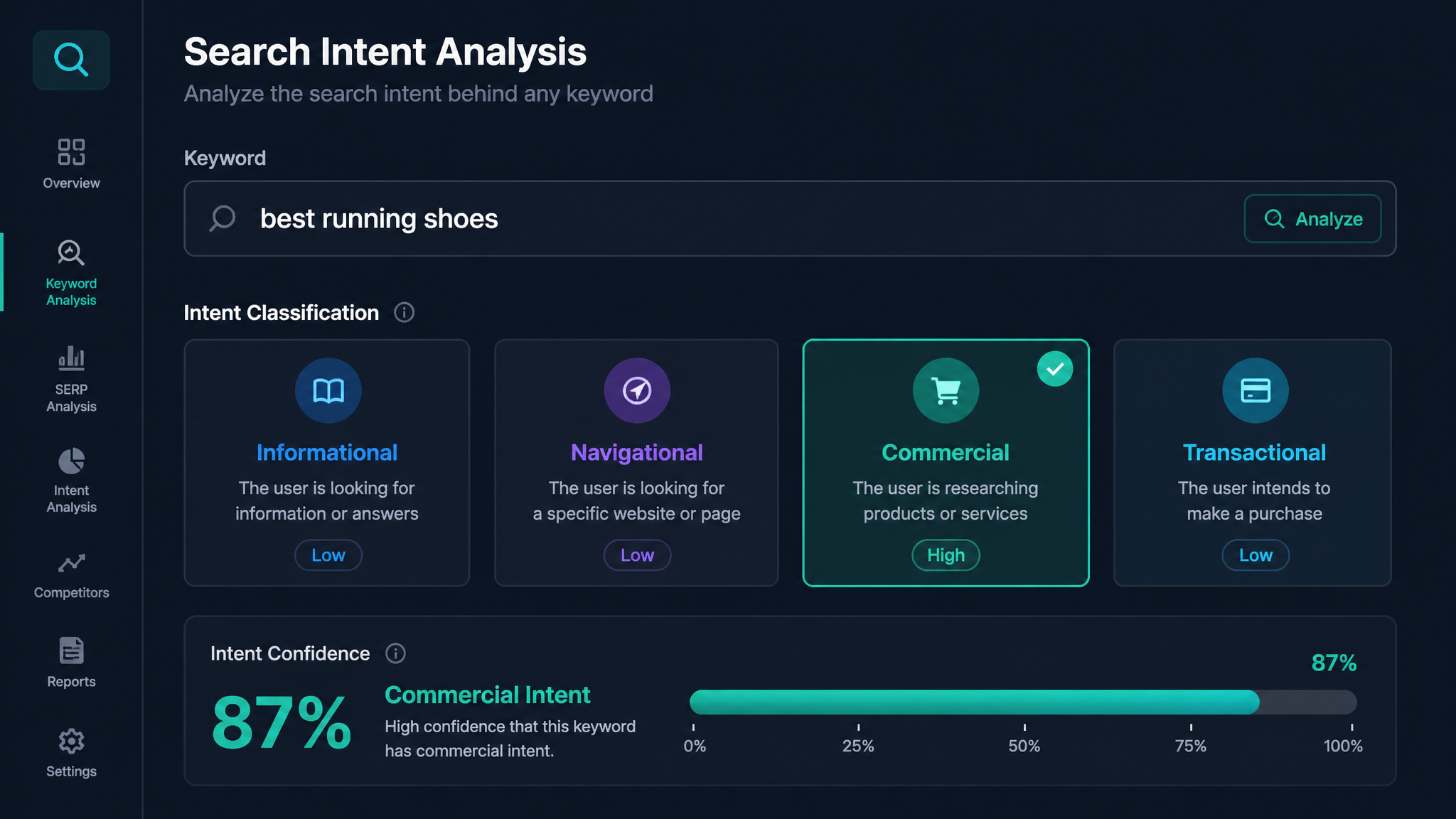
Free ebook: The Free SEO Stack
Keyword research without paying for Ahrefs — the complete guide. Read it online or download the PDF.
100% free · No spam · Unsubscribe any time
Ever typed a killer keyword into your favourite SEO tool and wondered, “But what exactly are people hoping to find here?” Welcome to the wonky world of search intent – the difference between ranking, and ranking for something people actually want. In this guide, you’ll discover how a search intent analysis tool acts like a decoder ring for Google’s mind, how to use one, and why it’s the silent MVP of modern keyword research.
What Is a Search Intent Analysis Tool (and Why Should You Care)?
Here’s what most people miss: not every keyword is created equal. Some are window shoppers ("best running shoes"), some have their wallets out ("buy Nike Air Max size 10"), and some are just here for the Wikipedia rabbit hole (“history of trainers”).
A search intent analysis tool is your trusty translator – it tells you what kind of answer Google thinks searchers want. Think of it as a metal detector for search results: are people looking to buy, learn, compare, or just gawk? No more guessing, no more wasting content on keywords that’ll never convert.
Why Search Intent Can Make or Break Your SEO
Bet you didn’t realise: Google’s first page is less about “who used the most keywords” and more about “who actually solved the searcher’s problem?”
Quick Analogy
Imagine a search intent analysis tool as a dating app for your content and your audience. You’re not just looking for anyone – you’re looking for The One who’s ready to commit (or, at the very least, click).
The Four Horsemen of Search Intent
Every keyword is riding in with one of these:
| Intent Type | What Searchers Want | Examples |
|---|---|---|
| Informational | Answers, how-tos, facts | "how to tie a tie", "SEO tips" |
| Navigational | To find a specific site or brand | "Facebook login", "Nike UK" |
| Transactional | To buy, sign up, or convert | "buy iPhone 14", "book dentist" |
| Commercial | To compare and research before buying | "best laptops 2024", "reviews" |
A good search intent analysis tool helps you tag each keyword fast, like sorting M&Ms by colour (and yes, the blue ones do go first).
How Does a Search Intent Analysis Tool Work?
You don’t have to channel your inner Sherlock Holmes. A decent tool does the heavy lifting by:
Some tools (like the free Keyword Search Intent Finder from KeywordNumbers) even show you a breakdown of SERP types, so you can spot mixed intent at a glance.
Worked Example: Analysing Search Intent in Real Life
Let’s say you’re researching the keyword “best running shoes for flat feet.”
What does that mean? Searchers are in research mode, comparing options, not ready to buy just yet. So, your best content play is a detailed comparison post, not a hard-sell product page.
How to Use a Search Intent Analysis Tool Like a Pro
Ready to stop guessing? Here’s the play-by-play:
Search Intent Analysis Tool Comparison Table
| Tool Name | Free? | Key Feature | Best For |
|---|---|---|---|
| KeywordNumbers | Yes | SERP-based intent & mixed-intent flag | SEOs on a budget |
| Semrush | No | Integrates with large keyword database | Agencies |
| Ahrefs | No | Intent auto-tagging in keyword explorer | Power users |
| Surfer SEO | No | SERP content analysis + intent signals | Content strategists |
Questions People Are Actually Asking
What is search intent?
Search intent is the underlying goal or purpose behind a user’s search query. Are they looking to learn, buy, compare, or find a specific website? Knowing this helps you create content that actually answers what people want, not just what they type.
How to find my intent to file?
This sounds more like a legal or administrative question (often related to benefits or patents), rather than SEO. If you’re looking for the intent behind a search query, use a search intent analysis tool. If you mean the official “intent to file” for government forms, check your relevant authority’s website.
How to view my intent to file?
Again, if you’re talking SEO, ‘intent to file’ isn’t a standard term. But if you mean checking the status of an official application (like for benefits or IP), log into the relevant government or agency portal. If you’re after keyword search intent, see above!
What is search intent in SEO?
In SEO, search intent refers to what users really want when they search for a keyword. Are they researching, ready to buy, looking for a particular brand, or just browsing? Matching your content to this is the difference between ranking and converting, or being ignored.
How do I choose keywords based on search intent?
First, use a search intent analysis tool to tag your keywords. Then, prioritise keywords where the intent matches what you can offer. No point writing a hard-sell landing page for a keyword full of Wikipedia-style answers. Meet the searcher where they are.
Are there free tools for analysing search intent?
Yes! The KeywordNumbers Search Intent Finder is a free, no-login-required tool that analyses SERPs and tells you the dominant search intent for any keyword.
Can one keyword have more than one intent?
Absolutely – these are called ‘mixed intent’ keywords. For example, “iPhone 15” might trigger both product pages (transactional) and reviews (informational/commercial). Good tools highlight mixed intent so you can decide whether to split your content or create a hybrid.
Conclusion: Ready to Play Matchmaker Between Searchers and Your Content?
If you’re still picking keywords by gut feel, you’re basically cooking blindfolded. A search intent analysis tool is your measuring cup – so you never serve soup in a teacup, or a steak on a saucer. Try the free KeywordNumbers Search Intent Finder now and see how your keyword targeting sharpens up overnight.
Free tools to put this into practice
Reading is one thing — testing your own pages is what moves the needle. Here are the free KeywordNumbers tools that pair best with this guide:
Every one of our free SEO tools is genuinely free to use, with no sign-up required.
Try the Keyword Gap Analysis Tool
Good news — there's now a free tool for exactly this. Give our Keyword Gap Analysis Tool a go and put this guide straight into practice.
Try the Search Intent Analysis
Good news — there's now a free tool for exactly this. Give our Search Intent Analysis a go and put this guide straight into practice.
Free ebook: The Free SEO Stack
Keyword research without paying for Ahrefs — the complete guide. Read it online or download the PDF.
- Which free tools replace Ahrefs, SEMrush & Moz
- Step-by-step keyword research workflow
- How to find content gaps without paying a penny
- The exact stack KeywordNumbers is built on
100% free · No spam · Unsubscribe any time
Ready to research your keywords?
Try our free keyword tools — no signup required.