Voice Search Keyword Research: Find the Phrases People Actually Say (Not Just Type)
Print / Save as PDFInsider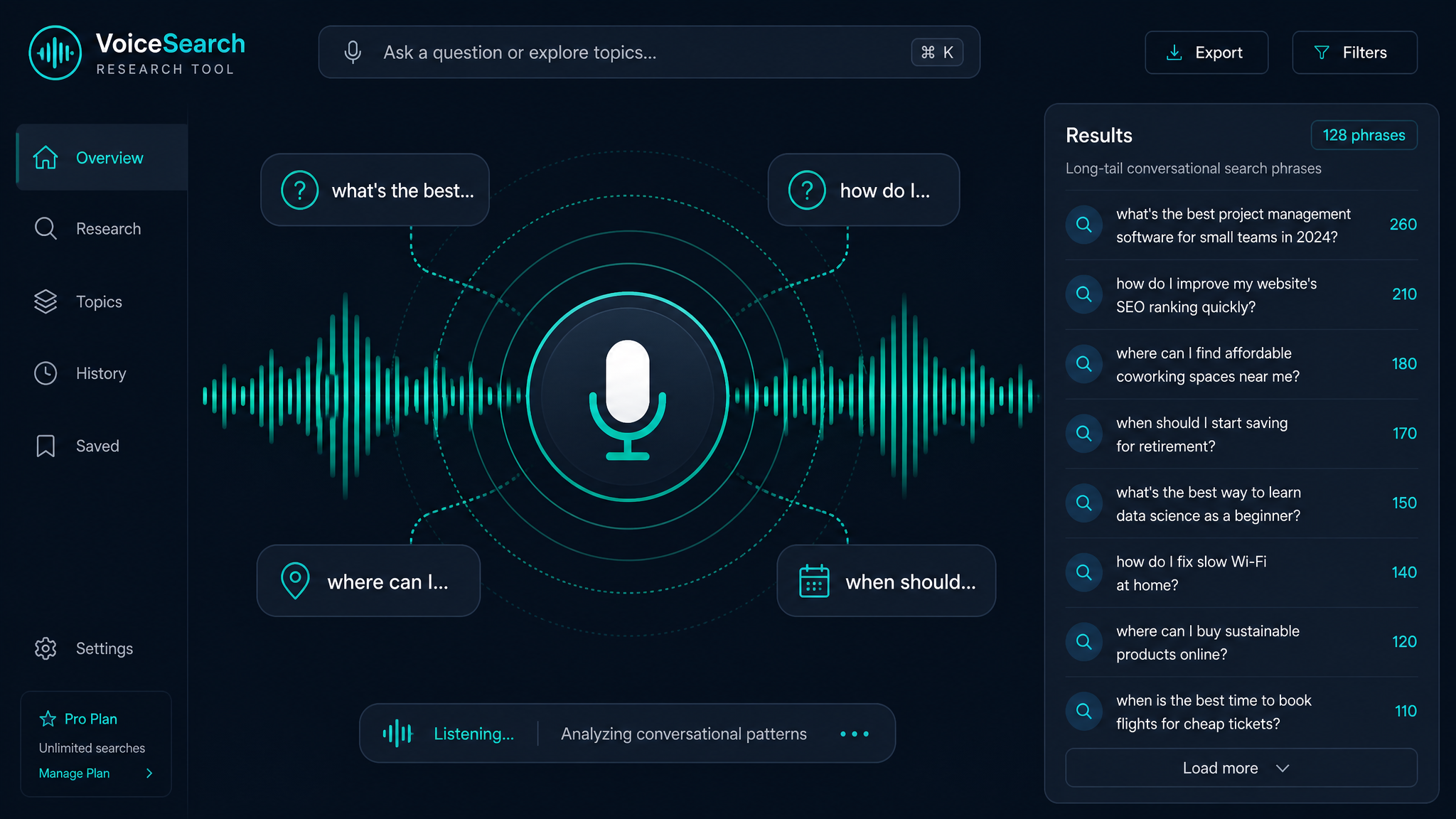
Free ebook: The Free SEO Stack
Keyword research without paying for Ahrefs — the complete guide. Read it online or download the PDF.
100% free · No spam · Unsubscribe any time
Ever felt like your SEO research is stuck in the 2010s, while everyone else is shouting at their gadgets and getting instant answers? This guide breaks down how to do voice search keyword research—so you don’t just rank for what people type, but for what they actually say. I’ll walk you through why voice search is its own beast, how to find the right keywords, and which free tools will keep your research sharp (and your coffee budget intact).
What is Voice Search—and Why Does It Matter for Keyword Research?
Let’s not overcomplicate things: voice search is when someone asks a device a question out loud—think Alexa, Siri, or that Google Assistant you pretend not to use. Instead of typing "best pizza recipe," they say, "How do I make pizza at home from scratch?"
Here’s what most people miss: voice search is far more conversational. It’s the difference between texting "pizza recipe" and asking your mate, "What’s the easiest way to make pizza if you’re terrible at cooking?" Google, in all its wisdom, tries to match those spoken phrases to actual content. If your keywords are stuck in the land of robotic, stilted phrases, you’re missing the party.
Voice Search vs. Traditional Keyword Research: What Changes?
Bet you didn’t realise how different voice search queries look. Let’s break it down:
| Traditional Keyword | Voice Search Keyword |
|---|---|
| "weather London" | "What’s the weather like in London today?" |
| "best running shoes" | "What are the best running shoes for flat feet?" |
| "SEO tips" | "How do I improve my website’s SEO in 2024?" |
Notice a pattern? Voice search keywords are longer, more natural, and usually framed as questions. Think of them as the difference between a shopping list and a conversation with your nan.
How to Do Voice Search Keyword Research (Without Losing Your Mind)
If you just try to rank for the same short-tail, clunky phrases as everyone else, you’ll get left in the dust. Here’s how to research keywords that actually show up in voice search results:
1. Start With Real Questions
People talk to their devices like they talk to people. That means:
Pro tip: Sites like AnswerThePublic and Reddit (yes, even the weird corners) are goldmines for real-world questions. Or, use our free question keyword generator to shortcut the process.
2. Check Search Volumes (Don’t Skip This Step)
Not all questions are created equal. Some get searched ten times a month; others, thousands. To check keyword search volume:
Worked Example: Checking Keyword Volumes
Let’s say you’re researching for a recipe site:
That’s still a chunky slice of traffic, especially when you remember voice queries are less competitive. (And if you’re in Canada or Australia, the trends are similar—just swap out the maple syrup jokes accordingly.)
3. Optimise Content for Voice
Don’t just stuff these long questions in your meta tags and call it a day. Actually answer them, clearly and concisely, in your content. The algorithmic gods favour content that answers the question right up top, then dives deeper.
4. Use Schema Markup
Schema is like a high-vis jacket for your answers—makes them stand out in search. Use FAQ schema for question/answer formats. This helps Google pull your response for spoken answers.
Free Tools for Voice Search Keyword Research (No Wallet Required)
You don’t need to remortgage your house for SEO tools. Try these:
Questions People Are Actually Asking
What is voice search?
Voice search lets you speak a query to a device (like Google Assistant, Alexa, or Siri) and get spoken or written answers. Instead of typing, you ask out loud. It’s fast, hands-free, and increasingly popular, especially on mobile and smart speakers.
What is keyword search?
Keyword search is the process of entering a word or phrase into a search engine to find relevant results. For marketers, it’s also the act of researching which keywords people use so you can optimise your content to match—typed or spoken.
How to voice search?
To voice search, activate your device’s assistant (say "Hey Siri" or "OK Google"), then ask your question out loud. For example: "What’s the weather like in Belfast today?" The device processes your speech, turns it into text, and searches for the best answer.
How to check keyword search volume?
Use a tool like the Keyword Search Volume Checker to see how many times a keyword is searched each month. Just enter your phrase, pick your country, and get the numbers—no guesswork or spreadsheets required.
How to do keyword research?
Start by brainstorming topics relevant to your audience, then use keyword research tools to find related phrases and questions. Check their search volume and difficulty, pick those that fit your goals, and weave them naturally into your content. For voice search, focus on longer, conversational questions.
What is the best keyword search volume?
There’s no magic number—the "best" search volume depends on your niche and competition. High-volume keywords bring more potential traffic but are usually more competitive. For voice search, lower-volume, highly specific questions can be easier to rank for and still valuable.
How to search by keyword?
Type your chosen word or phrase into a search engine and hit enter. For voice-friendly keywords, try searching as a question and see what results show up—this can reveal which sites are already optimised for voice.
How to search using voice?
Activate your device’s assistant, then ask your question naturally, just as you would to a person. The assistant will process your request and return answers—no typing required.
Ready to Find Your Next Voice Search Winner?
Voice search isn’t a fad—it’s how millions of people find answers every day. Get ahead of the curve (and your competitors) by researching voice-friendly keywords with the Keyword Numbers free tools. Start with a real question, check the search volume, and optimise your content to answer it. Your future self (and your traffic reports) will thank you.
Free tools to put this into practice
Reading is one thing — testing your own pages is what moves the needle. Here are the free KeywordNumbers tools that pair best with this guide:
Every one of our free SEO tools is genuinely free to use, with no sign-up required.
Try the YouTube Keyword Generator
Good news — there's now a free tool for exactly this. Give our YouTube Keyword Generator a go and put this guide straight into practice.
Try the Voice Search Keywords
Good news — there's now a free tool for exactly this. Give our Voice Search Keywords a go and put this guide straight into practice.
Check your meta tags for free
Want to see if your metadata is set up correctly? Run any page through our free meta tag checker to check the title tag and meta description length in seconds.
Free ebook: The Free SEO Stack
Keyword research without paying for Ahrefs — the complete guide. Read it online or download the PDF.
- Which free tools replace Ahrefs, SEMrush & Moz
- Step-by-step keyword research workflow
- How to find content gaps without paying a penny
- The exact stack KeywordNumbers is built on
100% free · No spam · Unsubscribe any time
Ready to research your keywords?
Try our free keyword tools — no signup required.